

As the 'Dual Carbon' goals drive China's energy transition from fossil fuels to a new power system dominated by wind and solar, power enterprises face unprecedented challenges in distributed generation, cloud-edge collaborative dispatch, and massive device connectivity. A resilient, secure, and self-controlled IT infrastructure has become a strategic necessity.
Winhong Information, with over 15 years of independent virtualization R&D, serves 2,000+ major clients across government, finance, energy, and transportation. In the power sector, Winhong delivers end-to-end solutions for four core scenarios: Generation Station Monitoring (Scenario 3), Cloud-Edge Distributed Storage (Scenario 1), Edge Model Computing & Interaction (Scenario 2), and Smart Power Metering (Scenario 4). All solutions strictly comply with the I/II/III zone security architecture mandated by China's Power Monitoring System Security Protection Regulations, with full support for domestic chips (Kunpeng/Phytium/Loongson/Hygon) and Xinchuang-compliant operating systems.
Winhong's electric power & energy solutions are built around four pillars: cloud-edge collaboration, security compliance, Xinchuang adaptation, and unified O&M, delivering a full-chain digital infrastructure for generation, transmission, distribution, and consumption.
◆ WinHCI Hyper-Converged:
Deeply integrates compute, storage, and networking on standard x86/domestic servers, raising resource utilization from <20% to 70%+.
◆ WinStore Distributed Storage:
Full shared-nothing architecture; 2M+ IOPS per volume; 65 us latency; SM national cryptography; Level 4 power security compliance; lightweight 2U edge deployment.
◆ WinCloud Cloud-Edge Management:
Unified architecture and O&M platform; one-click node enrollment, batch deployment, remote monitoring; reduces backhaul bandwidth by up to 90%.
◆ AI Training & Inference:
Zone II edge inference (millisecond-level); Zone III GPU training cluster; secure model distribution via forward-isolation devices; full AI closed loop.
◆ Xinchuang Adaptation:
Full compatibility with Phytium, Kunpeng, Hygon, Loongson CPUs; supports Kylin OS and UOS; integrates with DM, Kingbase national databases.
◆ Full-Stack Trusted Application:
Fully compatible with underlying trusted hardware including TPCM (Trusted Platform Control Module) Root of Trust and TSB (Trusted Software Base). It adapts to trusted cloud deployment architectures such as government trusted cloud, industrial trusted cloud, and hybrid trusted cloud. The solution deeply implements a full-link verification mechanism covering boot-time static measurement, runtime dynamic measurement, and remote trusted measurement. It helps critical industry entities meet the requirements of cybersecurity active immunity construction, enabling end-to-end trusted and controllable hardware and software throughout the entire lifecycle in cloud environments.
 Resource Silos & Low Efficiency
Power stations and metering centers operate isolated IT systems with no resource sharing. Traditional architectures run at <20% utilization, with high expansion costs and delayed responses, creating severe "information silos".
- Strict Security Compliance Requirements
Power monitoring systems must enforce both physical and logical isolation across Zones I, II, III, and the secure access zone. Legacy solutions fail to meet tiered protection and Classified Protection Level 2.0 requirements, creating data-breach and business-interruption risks.
- Difficult O&M & Slow Response
Power plants and edge nodes are often in remote locations with insufficient O&M staff. Fault resolution requires long-distance travel, driving up mean repair time and incurring high travel and labor costs that threaten business continuity.
- Performance Bottlenecks & Insufficient Intelligence
SCADA real-time control, high-frequency metering (second-level), and AI edge inference demand ultra-low latency and high IOPS. Legacy architectures cannot support millisecond-level responses; siloed AI deployment and the lack of cloud-edge synergy further block intelligent transformation.
- Xinchuang Migration & Compatibility Pressure
China's Xinchuang policy mandates replacement of foreign virtualization (e.g., VMware) and chip platforms in the energy sector. However, multi-chip co-existence during the transition phase creates high compatibility risks and long migration cycles, requiring business continuity and compliance to be achieved simultaneously.
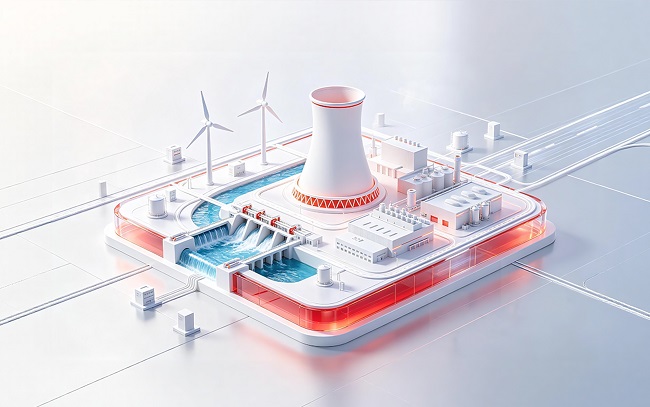 Scenario 1: Cloud-Edge Distributed Storage (CSG CEP Platform)
For Power Grid's CEP platform, WinStore distributed storage delivers full-zone coverage across Zones I/II/III and the secure access zone. Lightweight 2U edge deployment, 2M+ IOPS per volume, 65 us latency; built-in SM encryption meeting Level 4 power security; unified architecture enables one-click node enrollment and remote O&M, reducing backhaul costs by up to 90%, lifting utilization by 30%+, and cutting TCO by 25%+.
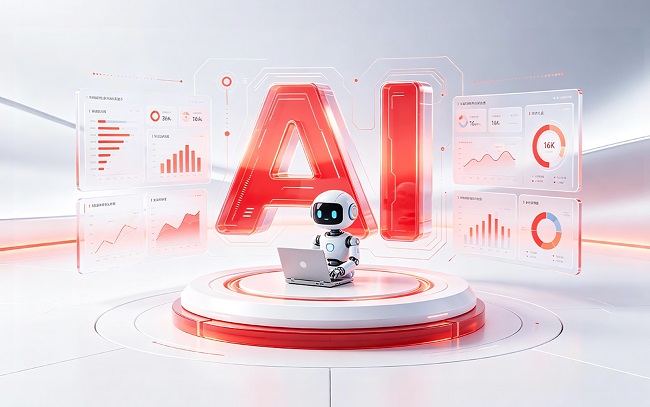 Scenario 2: Edge Model Computing & Cloud-Edge AI Interaction
For the AI intelligence requirements of CSG's CEP architecture, Winhong builds a three-tier integrated platform: distributed storage foundation + hyper-converged computing core + cloud-edge collaborative management. Zone II edge AI platform delivers millisecond inference for fault prediction and device monitoring; Zone III GPU cluster drives continuous model iteration; forward-isolation devices enable the complete AI loop (cloud training to model delivery to edge inference to data feedback), cutting model deployment latency from hours to minutes while fully complying with Classified Protection 2.0 and power security regulations.
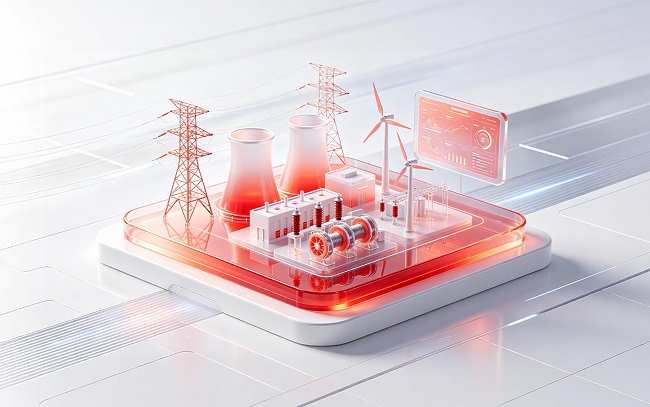 Scenario 3: Generation Station Monitoring System (HCI + Edge Intelligence)
For wind, solar, hydro, and thermal power plants, Winhong's hyper-converged solution starts with just 3 nodes and adapts to harsh physical environments. It integrates Zone I SCADA/AGC/AVC core control, Zone II metering and fault recording, and Zone III ERP/OA management. Built-in edge AI delivers millisecond-level device anomaly alerts; unified cloud-edge architecture supports remote batch O&M; TCO reduced by 30%+, resource utilization up 50%+, 7x24h uninterrupted operation.
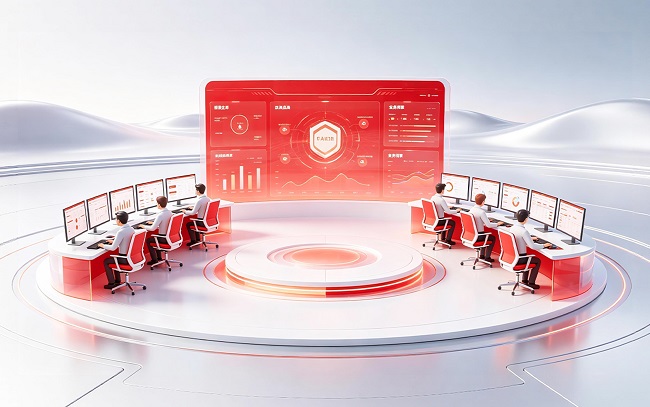 Scenario 4: Smart Power Metering System (Trusted Computing Cloud)
To support the intelligent upgrade of power grid metering automation systems, Yunhong builds an elastic, intelligent and secure integrated metering resource base.The Grid Zone II real-time intelligent computing platform supports second-level high-frequency data collection and AI-powered anti-electricity-theft identification (identification rate ≥95%), lifting the collection success rate from 99.5% to 99.99%. The Grid Zone III GPU training cluster improves line loss calculation accuracy by 5%-10% and cuts model iteration cycle by 50%. The Grid Zone IV hybrid cloud architecture stably handles 100,000-level concurrent payment requests. Elastic resource pooling boosts server utilization from 20% to over 70%, with an overall performance improvement of over 30%.Adopting trusted cloud technology based on Trusted Computing 3.0, the system delivers full lifecycle trusted measurement covering cloud, edge and terminal for the whole metering system, and realizes active defense against cyber attacks.
 Scenario 5: Legacy VMware Replacement & Xinchuang Migration
For mass VMware replacement in the power sector, WinStack's 'one cloud, multi-chip' management capability enables unified scheduling across Kunpeng, Phytium, Intel, and Hygon chips. Feature parity with VMware (hot-add, scheduled snapshots, multipath storage, etc.) avoids single-vendor lock-in.
Value
 Cost Reduction & Efficiency Gains:
30%+ TCO Reduction, 50%+ Utilization ImprovementHyper-converged resource pooling breaks physical silos, raising average server utilization from <20% to 70%+, cutting overall TCO by 30%+; elastic scaling eliminates full-replacement cycles, reducing initial investment by 50%; unified O&M platform enables remote centralized management, sharply cutting on-site travel and labor costs.
 Stability & Reliability: 7x24h Continuity,
99.99% High AvailabilityFull-chain multi-replica redundancy and fault self-healing enable seamless failover; core system availability 99.99% (annual downtime <53 minutes); multi-level fault isolation ensures single-point failures do not impact overall operations; robustly supports millisecond-level response for SCADA and other real-time control workloads.
 Security & Compliance:
Meeting Power Level 4 Security, Eliminating Compliance RiskStrictly compliant with China's Power Monitoring System Security Regulations; physical and logical dual isolation across Zones I/II/III and secure access zone; built-in SM national cryptography and full-chain data encryption meeting Classified Protection Level 3/4; defense-in-depth ensures core business data remains secure and controlled.
 AI Empowerment:
Edge Inference + Cloud Training, Accelerating Energy IntelligenceZone II edge AI platform delivers millisecond inference for fault prediction and device monitoring; Zone III GPU cluster continuously iterates and optimizes models; anti-theft identification rate 95%+, line-loss accuracy improved by 5-10%, model iteration cycle reduced by 50%; transforms power operations from passive recording to active prevention.
 Xinchuang Delivery:
Full Domestic Stack, Enabling Self-Controlled Energy InfrastructureFull compatibility with Phytium, Kunpeng, Hygon, Loongson CPUs and Kylin/UOS OS; deep integration with DM, Kingbase national databases; 'one cloud, multi-chip' architecture handles multi-chip co-existence, eliminating single-vendor lock-in; has helped Dadu River and other leading power enterprises complete Xinchuang transformation, building a fully self-controlled IT infrastructure.
 Simplified O&M:
Unified Remote Management & AI Fault Self-HealingUnified O&M platform enables full-domain IT resource visualization ('one screen for all'); AI-powered fault prediction and automated remediation detects anomalies in milliseconds; supports standardized automation for batch deployment, patch upgrades, and configuration changes; remote unified management completely eliminates long-distance on-site O&M, dramatically improving operational efficiency.

7*24-hour Service Hotline
400-6300-003